
Cricket’s best bowler doesn’t live in a spreadsheet. He breathes pressure. He reads pitches with his fingertips, senses batters’ footwork before release, and threads a plan through chaos when the ball is 60 overs old or the white ball skids off a dewy outfield. That’s the truth behind the idea of the world’s number one bowler: data can point you there, but feel — the lived understanding of roles, conditions, and match moments — completes the picture.
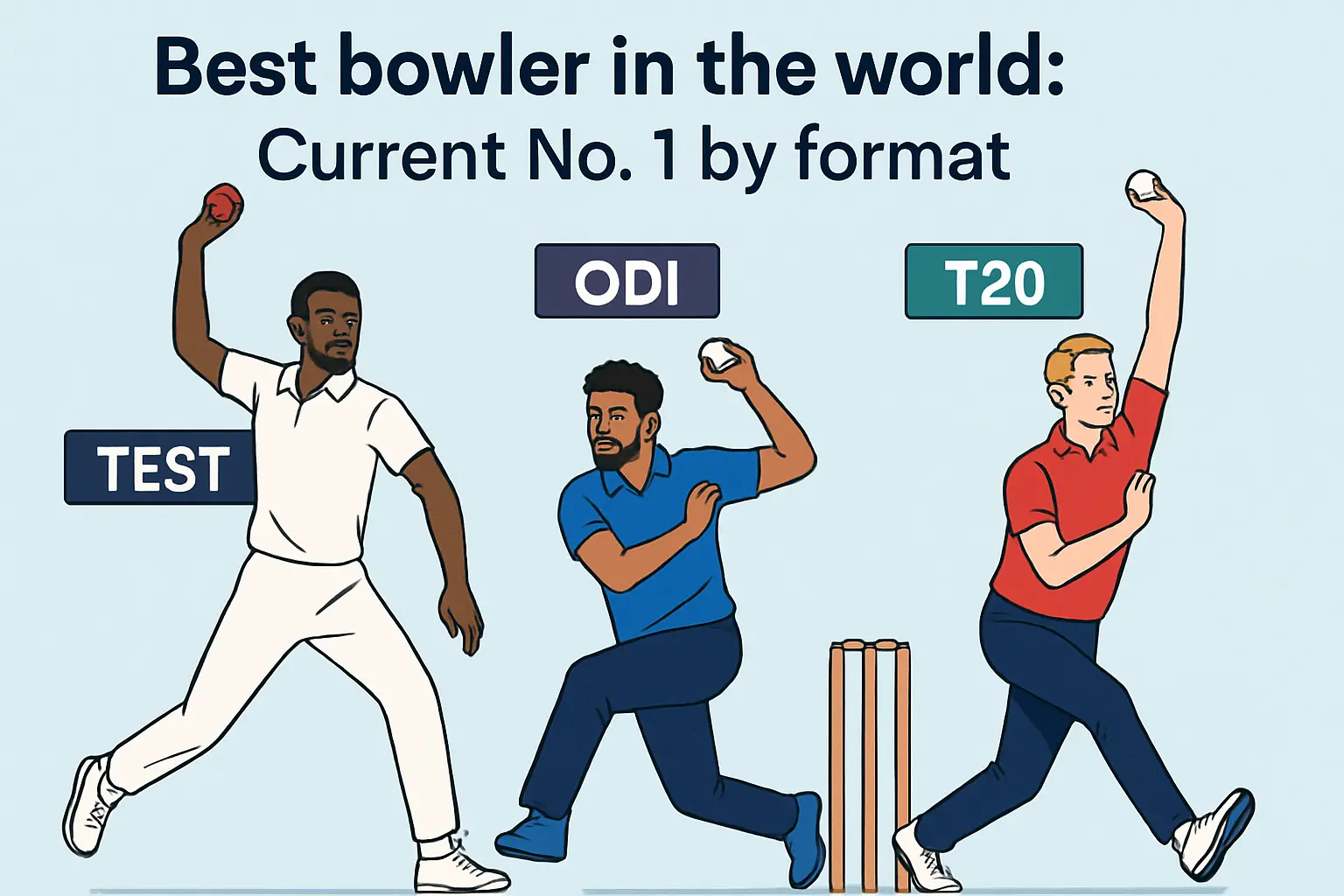
This is a rolling, expert-led view of the best bowler in the world across formats: Test, ODI, and T20I. It blends ICC bowling rankings with what actually wins games: recent form against elite opposition, venues and conditions, role clarity (powerplay, middle overs, death), and the intangible ability to shift momentum. You’ll find the current no. 1 by format, a transparent methodology, a composite top ten, role-specific leaders (yorker king, best swing bowler, best death bowler in T20), league specialists (IPL, PSL, BBL, CPL), and a dedicated section for women’s cricket, where the world’s best is a story of skill, repeatability, and tactical poise.
Our Ranking Methodology (Beyond ICC Points)
ICC rankings are a valuable anchor. But if you’ve sat in dressing rooms and war rooms, you learn to ask better questions. Who did those wickets come against? On what pitches? Under what field restrictions? Could the bowler control a chase, not just chase a five-for? That’s what this model captures.
Core principles
- Recency and opponent strength: A wicket column means more when it’s Rohit Sharma, Babar Azam, Kane Williamson, or Meg Lanning with movement early, or Suryakumar Yadav and Glenn Maxwell at the death. We weight performances more heavily against top-seven ranked teams and elite T20 leagues.
- Venue and ball: Dukes vs Kookaburra vs SG. High-heat subcontinent afternoons vs lush English mornings. The model adjusts for how hard it is to take a wicket and control scoring in that environment.
- Role clarity: Powerplay specialists, middle-overs stranglers, death assassins. Each role has different expected strike rate and economy benchmarks; bowlers are graded against role norms, not an unrealistic one-size-fits-all.
- Phase control and adaptability: Can a bowler switch from hard length to cutters when the ball is slick? From over-the-wicket to around, to change the angle on a left-hander? The greats win the small battles inside overs.
- Wicket quality: Top-order wickets recorded earlier in the innings carry more weight than tailenders mopping up.
- Durability and repeatability: Elite bowling repeats. Fewer “boom or bust,” more “I know exactly what I’ll get.”
- Pressure moments: Overs at the death, new-ball spells with slip cordons alive, partnership-breaking spells. Crucial overs are upweighted.
- Team context and match impact: We factor win probability shifts; a spell that drags a team back from a bleak position is rated higher than the same figures when the game is already safe.
Weighted model (guideline; we revisit weights periodically)
- Recent form window (last 18–24 months): 40%
- Opposition quality and venue difficulty: 20%
- Role-adjusted economy, strike rate, average: 20%
- Wicket quality and clutch overs: 15%
- Durability/availability: 5%
The result is a cleaner answer to the everyday fan’s core instinct: who is the best bowler right now, not simply who has banked the most ICC points across a wider timeframe.
The Current No. 1 Bowler in the World: Overall Composite
Shortlist a dozen names and the arguments turn lyrical — and fierce. But if the task is to pick one bowler for any format, any conditions, to defend any total or rip through an order, the composite model leans one way.
Overall no. 1 bowler right now
- Jasprit Bumrah
Why the model tilts his way
- Skill stack: New-ball seam and swing without bleeding runs. Middle overs with subtle changes in length. Death overs with the most reliable, repeatable yorker in cricket. Cutters for grip, slower bouncers for surprise, hard length that climbs off a length.
- Conditions proof: From the subcontinent’s abrasive surfaces to green seams, he carries menace. Few seamers have looked as complete across continents in the modern game.
- Wicket quality: Consistently removes top order. His victims’ average batting ranking skews high.
- Phase control: In T20 and ODI death overs, his economy sits in elite territory, often halving a par final-four-over output.
- Impact spells: Opening bursts that rip out set plans; post-lunch Test spells that wheel back matches; IPL closing overs that vaporize chase equations.
Other names are right there, breathing down his neck — Pat Cummins, Kagiso Rabada, Rashid Khan, Adil Rashid, Josh Hazlewood, Shaheen Afridi, Ravi Ashwin — but the composite across skill, conditions, and impact gives Bumrah the thinnest of leads.
Top 10 Bowlers in the World (Composite Model)
This is a cross-format, role-adjusted list updated with form cycles. It rewards bowlers who influence matches in multiple environments, not just one storyline.
| Rank | Bowler | Primary Styles/Roles | Why They’re Here |
|---|---|---|---|
| 1 | Jasprit Bumrah | Right-arm fast; new-ball + death; all formats | Pace with precision; yorker king; all-country dominance |
| 2 | Pat Cummins | Right-arm fast; Test spearhead; ODI new-ball | Hitting-the-deck genius; never free runs; leadership steel |
| 3 | Rashid Khan | Leg-spin; T20/ODI middle overs; death option | T20’s ultimate problem; drift, pace variation, nerve |
| 4 | Ravichandran Ashwin | Off-spin; Test middle to late; control + deception | Relentless on spin tracks; clever everywhere else |
| 5 | Kagiso Rabada | Right-arm fast; Test/ODI banker | Heavy length, late movement; clutch wickets |
| 6 | Josh Hazlewood | Right-arm fast; ODI/T20 powerplay; Test metronome | Hates giving boundaries; immaculate length |
| 7 | Adil Rashid | Leg-spin; T20I strike leader | White-ball brain; slowest ball to fastest googly sequencing |
| 8 | Shaheen Afridi | Left-arm fast; new-ball destroyer | Late swing at pace; early breakthroughs shape games |
| 9 | Kuldeep Yadav | Left-arm wrist-spin; ODI/T20 middle | Air time and deception; better pace control now |
| 10 | Trent Boult | Left-arm fast; ODI/T20 powerplay | Angles and swing early; takes out right-handers for fun |
A few just outside: Mitchell Starc (tournament intimidator), Mohammed Siraj (new-ball jag), Keshav Maharaj (white-ball control), Adam Zampa (middle-overs craftsman), Haris Rauf (pace and death), Ravindra Jadeja (Test stranglehold plus subtle drift), Naseem Shah (ball-on-a-string discipline), Sunil Narine (mystery, role rebirth), Matheesha Pathirana (T20 death revolution), Mark Wood (pace that changes plans).
Current No. 1 Bowler in Test Cricket
The red ball is the brutal exam. No hiding behind field restrictions, no scripted death overs. The best Test bowler right now edges out rivals not only by strike rate and average but by the ability to shape a session.
The leader: Jasprit Bumrah
- Reasons that count
- Seam position so consistent it hurts; late movement both ways without dramatic change in action.
- Lethal spells in all climates: wobble-seam outside off in seam-friendly lands; reverse on abrasive wickets; bowling cutters on slow tracks when the ball goes soft.
- A rhythm that creates ugly decisions from great batters; his first 12 balls to an in-form top order tend to define series trajectories.
Chasing hard
- Ravichandran Ashwin: The specialist surgeon on spin-friendly decks — nuanced flight, over/under-spin changes, leg-cutter variations to right-handers. Also ruthless on flattening surfaces through accuracy and curiosity.
- Pat Cummins: Machine lines, back-of-a-length hostility, late nibble with the Kookaburra that few achieve. Also a master at reading a batter’s trigger step and tailoring bounce height.
- Kagiso Rabada: Strike bowler who hits the knee roll. When rhythm clicks, he turns sessions into avalanches.
- Nathan Lyon: The off-spinner’s primer for bounce and angles; holds length longer than most.
- Mohammed Shami and Mohammed Siraj: Seam and persistence. Shami’s scrambled seam and late skid; Siraj’s bash-the-deck and noiseless seam let-go.
Red-ball nuances the model loves
- The long spell after lunch when the ball is 35 overs old and your first plan died on delivery four. Does the bowler adjust length by six inches and find life? Bumrah and Ashwin do. Cummins and Rabada do. The rest try.
Current No. 1 Bowler in ODI Cricket
ODI cricket is an argument between handbrake and accelerator. The best ODI bowler in the world stitches three games: the first ten overs, the holding pattern from over eleven to forty, and the finishing sprint.
The leader: Jasprit Bumrah
- Control phases: He might go for a maiden in the second over and return at the death with 3–4 yorkers per over. Oppositions often burn a review on him because LBW lines are so tight.
- Wicket quality: Powerplay breaks set the tone. In the middle, he bowls into the pitch more than full if the surface is tacky, forcing poor hits to the big boundary.
- Death magic: The slower yorker makes left-handers doubt the slog to cow corner. The wide-yorker line never strays into “bonus ball” territory.
Heat right behind him
- Josh Hazlewood: White-ball metronome. Powerplay dot pressure without freebies; gets top-order batters to hit to the infield at chest height.
- Trent Boult: Curves the new ball; if he gets shape, two slips are in the game for ten overs.
- Keshav Maharaj: The ODI economist. Quiet overs during the middle make chasing suddenly climb.
- Kuldeep Yadav: Serial middle-overs wicket-taker now that he controls tempo better; the googly threatens both batters.
- Adam Zampa: Absorbs counterpunches, strings back-to-back attacking balls at brave lines.
What the model punishes
- One-phase bowlers who spike economy at the death or cannot hit bailout lengths under assault. ODI hitters are merciless; if a bowler only owns eight overs of calm, the other two can torch a spell.
Current No. 1 Bowler in T20I Cricket
T20 is theatre, and the best T20 bowler must love the spotlight. There’s no “keep it dry for five overs” here. One big over, and the evening tilts forever.
The leader: Rashid Khan
- Why it endures: He bowls fast leg-spin with enough overspin to draw lofted mishits, and enough side-spin to beat the bat. He has a googly at pace that reads like the leggie out of the hand. He fields his own bowling like a fourth fielder in the ring. He wants the crunch overs.
- Role span: He owns the middle, and if needed, grabs an over at the death with hard, flat length on a fifth-stump line.
Elite rivals
- Adil Rashid: T20I ranking topper in recent cycles. Disguises his pace drop better than anybody; traps slog-sweepers in pockets of the boundary.
- Jasprit Bumrah: Death overs in T20I feel different with him. Two runs here, three there, yorker when you least want it.
- Haris Rauf: Raw pace and hostility; wide-of-the-crease darts at the toes; sharp bouncer as gear change.
- Mustafizur Rahman: The cutter lab. Seam position masked, ball slows late. Deadly on tired pitches.
- Tabraiz Shamsi: Can string dots without risk, then attack with the wrong’un to left-handers.
The T20 model’s golden rule
- Control one powerplay over, own two overs of the middle, and give your captain one death option. If a bowler can reliably deliver that 1–2–1 template, he’s elite.
Best Fast Bowlers vs Best Spinners
Fast bowlers
- Jasprit Bumrah: The blueprint. Seam, swing, death. Bowls the heavy ball when needed, then slices back to seam kissers.
- Pat Cummins: Hits hard length above the sticker on the bat; same release, different bounce profiles.
- Kagiso Rabada: Frenetic but repeatable; defends rates even while hunting.
- Shaheen Afridi: Left-arm sizzle; late inswing with new ball; draws misjudgments with the angle.
- Josh Hazlewood: The Lego-blocks of ODI fast bowling — built piece by piece without decoration.
- Mitchell Starc: Threatens stumps at 150 clicks; dreaded inswinging yorker to right-handers.
Spinners
- Rashid Khan: Spin at pace; middle-overs obedience to plan; terrifies batters who sweep instinctively.
- Ravichandran Ashwin: Mind games; slows the ball through the air and through the mind; kills scoring patterns.
- Adil Rashid: Big-stage nerve; knocks the top off T20 innings without bowling a boundary ball line.
- Kuldeep Yadav: Gives the ball air then steals it back; better repeatability since fixing pace control.
- Keshav Maharaj: ODI lid-closer; shapes lines for right/left pairs exquisitely.
- Ravindra Jadeja: Finger-spin plus laser accuracy, fantastic fieldsman to close singles.
Best Bowlers by Conditions (Home/Away, Spin-Friendly, Death Overs)
Subcontinent conditions (spin-friendly, abrasive, slower)
- Ravichandran Ashwin: Baits with drift, finishes with dip and close-to-the-bat spin. Over-the-wicket to left-handers with carrom-ball and subtle seam.
- Ravindra Jadeja: Hits a three-quarters spot forever; skids at stumps; catches bat-pad with bounce off the shoulder of the bat.
- Kuldeep Yadav: Air time hurts muscle-memory hitters; deceives length more than line.
- Jasprit Bumrah: Reverse and cutters; hits the heel of the bat on raggy surfaces; yorkers find the base even when dew makes gripping hard.
- Mustafizur Rahman: Surface grip turns his cutters into landmines.
Seam-friendly pitches (England, early-season New Zealand types)
- Josh Hazlewood: Keeps a top-of-off story running; makes batters play when they don’t want to.
- Pat Cummins: Kookaburra doesn’t always hoop; he extracts bounce and seam nibble anyway.
- Trent Boult: Left-arm powerplay poetry; draws the poke that second slip wants.
- Mohammed Siraj: Upright seam; gets it to talk; channel-lifts that draw nicked drives.
- James Anderson: The timeless master of late outswing; seam control lecture for generations.
High-bounce, fast decks (Australia, South Africa)
- Kagiso Rabada: Explodes off back-of-a-length; exposes false technique quickly.
- Pat Cummins: Drives batters back in the crease, then makes full balls look fuller.
- Mark Wood: Rare pace; short balls that rush hookers; yorkers at 150 clip change calculus.
- Jasprit Bumrah: Hard length into ribs; cross-seam tennis ball bounce when needed.
Death overs (T20/ODI)
- Jasprit Bumrah: Yorker king of world cricket; the white-ball mind whisperer — he predicts the slog-sweep and beats it.
- Haris Rauf: Quick, skiddy, champs the short-of-length slot ball that hurries.
- Mustafizur Rahman: Disguised cutters; wide lines that flirt with tramlines without crossing.
- Matheesha Pathirana: Sling angle; wide yorkers and chest-seeking length at pace.
- Shaheen Afridi: Full with swing; still bangs the bouncer to force indecision.
Powerplay specialists
- Trent Boult: Takes ball across right-handers with late bend; feet frozen, edges flowing.
- Josh Hazlewood: Dots multiply; every second ball demands a shot that isn’t there.
- Shaheen Afridi: Ball one can be a wicket; left-arm line opens stumps.
White-ball middle-overs controllers
- Rashid Khan: Wickets with cover; gives nothing to slap through the line.
- Adil Rashid: Sets fields like chess; repeatable good balls that don’t leak.
- Kuldeep Yadav: Forced errors searching singles that aren’t there.
Women’s Cricket: Best Bowlers Right Now
The world’s best women’s bowlers have redefined what control looks like across formats. The strike rate race is compelling, but the story is repeatability under pressure and smart change-ups.
The clear leader: Sophie Ecclestone
- What makes her special: Tall left-arm spin with perfect control of pace and trajectory. Batters misread length because her release looks identical whether the ball drops earlier or pushes on. She switches between angles around the wicket to right-handers, holds a teasing pace to left-handers, and rarely gives the slot.
- White-ball excellence: Run-rate suffocation in the middle overs defines many of her spells; wickets arrive as frustrated batters reach.
- Red-ball lift: Bowls to aggressive fields without compromise; hits a dime repeatedly; owns a low-risk attack line.
Other elite women’s bowlers
- Ashleigh Gardner: Off-spin with power, changes pace without telegraphing; big-match temperament.
- Deepti Sharma: ODI and T20I pulse-control; stump-to-stump threat; fields and finishes plays.
- Megan Schutt: Right-arm seam; outswinger that keeps moving late; white-ball powerplay banker.
- Amelia Kerr: Leg-spin all-format threat; googly disguised by wrist and shoulder rhythm.
- Renuka Singh Thakur: New-ball swing; explores edges relentlessly.
- Shabnim Ismail: Pace and hostility (even post-international retirement, a force in leagues); her bouncer asks uncomfortable questions.
- Jess Jonassen: Left-arm orthodox; ODI control artist; takes pace off cleverly.
League and Tournament Specialists
Best bowler in IPL (sustained impact)
- Jasprit Bumrah: The IPL’s template for death overs. Captains build their last five overs around his spell. Even in batting carnivals, his economy is stubbornly elite.
- Rashid Khan: Matchup genius; bowls where the batter doesn’t want it; at pace. Wickets or 18-run handbrakes define his nights.
- Yuzvendra Chahal: The all-time wickets pile speaks; fearless on small grounds, attacking with dip to draw big shots a fraction early.
- Bhuvneshwar Kumar: Two Purple Caps tell you early-overs craft and late-over nerve coexisted for a long time.
- Harshal Patel: A slower-ball doctorate; at his best, strings hitters into the big side of the ground.
Best bowler in PSL
- Shaheen Afridi: Captaincy vision plus new-ball fireworks. The early wicket habit changes the PSL powerplay DNA.
- Haris Rauf: Handles Lahore’s high-pressure cauldrons; skiddy pace at the death.
- Rashid Khan: When available, he makes mid-innings look like a cul-de-sac.
- Shadab Khan: Leg-spin with back-of-the-hand variations; handy in middle overs as run-rate clamp.
Best bowler in BBL
- Sean Abbott: Wicket-taking magnet; control plus bowling smarts under lights.
- AJ Tye: Knuckle ball whisperer; picks pockets at the death.
- Rashid Khan: A continent away, same menace; still the problem no algorithm solves fully.
Best bowler in CPL and The Hundred
- Dwayne Bravo: The OG T20 finisher; slower balls chosen with theatre, fields set to bait the big shot to long-on and deep midwicket.
- Sunil Narine: Mystery when he needs it, metronome when he doesn’t.
- Alzarri Joseph: Raw pace in bursts, angles that make pulls miscue.
Skill and Role-Specific Rankings
Yorker king of world cricket
Jasprit Bumrah. It’s not only the pace or the accuracy; it’s the pre-delivery habit of changing seam tilt at the last instant without telegraphing. He keeps the yorker fuller than most, so toe-crushers don’t turn into low full tosses. Shadow contenders: Mitchell Starc’s in-swinging toe-hunter; Shaheen Afridi’s ball that starts on leg and ends on middle.
Best swing bowler
Trent Boult with the new ball in white-ball cricket. Late curl makes the bat commit too early. In Tests, James Anderson remains the north star of moving the ball both ways from a near-identical release. Honorable mentions: Mohammed Siraj’s upright seam; Tim Southee’s cunning; Bhuvneshwar Kumar in powerplays when rhythm is there.
Best leg spinner
Rashid Khan in T20. Pure and simple. In ODIs, Kuldeep Yadav has become the most dangerous middle-overs leggie because he manipulates batter tempo now, not just turns the ball past the edge. Adil Rashid deserves special status: the best T20I leg-spinner at setting a plan for specific hitters under lights.
Best left-arm fast bowler
Shaheen Afridi in international cricket for new-ball destruction. Mitchell Starc in tournaments where late-swinging full balls turn finals. Trent Boult as a powerplay artist who punishes any early technical stiffness.
Best new-ball bowler
Powerplay belongs to Boult and Shaheen when they smell swing. In ODIs, Hazlewood’s chokehold is unparalleled: sixth-stump lines, knee-high bounce, and no freebies.
Best death bowler T20
Bumrah at the top. Mustafizur Rahman on slow surfaces; Haris Rauf and Matheesha Pathirana when raw pace and deception rule. Don’t forget Rashid Khan’s ability to bowl the 17th or 18th and end a chase.
Best bowler on spinning tracks
Ashwin as conductor; Jadeja as compressor; Kuldeep as illusionist; Ecclestone in women’s cricket as the unflappable surgeon.
Best bowler in seam-friendly England
Hazlewood and Anderson for Tests; Boult for white-ball powerplays; Cummins and Rabada for bounce-plus-nibble that travels well.
Fast Facts without the fluff
- ICC bowling rankings are a starting point, but the current no. 1 bowler in T20I cycles has frequently been Adil Rashid, while Rashid Khan remains the most feared T20 bowler across leagues.
- The “world number one bowler” tag in Tests has swung between Jasprit Bumrah and Ravichandran Ashwin recently, a nod to India’s depth and variety.
- In ODIs, the top ICC spot in recent tables has favored Keshav Maharaj and others in bursts, but the most complete ODI death-and-new-ball package remains Bumrah.
- The GOAT fast bowler debate hovers around Wasim Akram, Glenn McGrath, Curtly Ambrose, Dale Steyn, and James Anderson; different eras, different balls, same obsession with control.
- Best bowling average in Tests among high-volume wicket-takers leads many to admire Muttiah Muralitharan’s durability and strike power, with his 800 wickets an Everest.
- Fastest bowlers? Shoaib Akhtar’s certified peak remains the speed-benchmark; Mark Wood and Lockie Ferguson live in that modern extreme zone.
Stats Corner: How to Read Bowling Greatness
Raw wickets tell one story. The rate and cost of those wickets — and when they happen — tell the truth.
- Bowling average: Runs conceded per wicket. Great in Tests when under 25 across careers; in ODIs, elite seasons live under 25; in T20Is, it’s noisier, but anything under 20 for a sustained run is outstanding.
- Strike rate: Balls per wicket. Test bowlers under 50 are elite; ODI under 30 is gold; T20I under 18 turns matches.
- Economy rate: The white-ball heartbeat. In ODIs, anything consistently under 5 is rare at the top level; in T20I, living at or under 6.5 across decent volume is sorcery.
- Role adjustment: A death specialist with an economy under 8.5 in T20I might be worth more than a powerplay bowler at 6.7, given context. Models that judge all overs equally mislead readers.
- Wicket quality: Dismissing top three batters transforms averages. Middle-lower order mop-ups pad figures; the model irons this out.
Why “best bowler right now” changes fast
- Schedules. One team plays ten tough matches in swinging conditions; another cools its jets. Form swings with rhythm.
- Ball condition and rule tweaks. Subtle changes in playing conditions can reshape death bowling values overnight.
- Injury and volume. A bowler can look otherworldly for eight games; the best stay available and repetitive for much longer within the form window.
Comparisons and Versus
Bumrah vs Shaheen Afridi
Bumrah is complete across phases; Shaheen is volcanic up front. In a T20 chase, one over of Bumrah at the death might be more valuable; in a Test morning, Shaheen with the new ball can tilt a whole match in 30 minutes. Bumrah shades it on versatility; Shaheen carries the most dangerous powerplay ball to right-handers.
Rashid Khan vs Adil Rashid
Rashid Khan is the universal problem in leagues and internationals; pace on the ball, wrong’un that hides in plain sight, and unrelenting length. Adil Rashid’s T20I record, especially in high-stakes tournaments, shows mastery of batters’ plans. The Afghan superstar is the most feared; the English leggie is the best match-up tactician against specific hitters.
Pat Cummins vs Kagiso Rabada
Cummins is a geometric constant: top-of-off, hard length, subtle seam changes. Rabada swings between silk and thunder: when in flow, his strike rate crushes batting line-ups. Cummins concedes less; Rabada explodes more. In red-ball cricket, pick either and you’ve picked violence on length.
Condition- and Role-Specific Tables
Who to bowl when the game is on a knife edge? Use these at-a-glance matrices as a tactical prompt.
Best by phase (men’s white-ball)
| Phase | Primary Choice | Backup Options |
|---|---|---|
| Powerplay (overs 1–6) | Trent Boult | Shaheen Afridi, Josh Hazlewood, Mohammed Siraj |
| Middle overs (7–15 ODIs / 7–16 T20Is) | Rashid Khan | Adil Rashid, Kuldeep Yadav, Keshav Maharaj |
| Death overs (final 4) | Jasprit Bumrah | Haris Rauf, Mustafizur Rahman, Matheesha Pathirana |
Best by condition (red-ball)
| Condition | Primary Choice | Backup Options |
|---|---|---|
| Subcontinent turning day four/five | Ravichandran Ashwin | Ravindra Jadeja, Kuldeep Yadav |
| Green seamer morning | Jasprit Bumrah | Josh Hazlewood, Mohammed Siraj |
| Hard, bouncy decks | Pat Cummins | Kagiso Rabada, Mark Wood |
Women’s white-ball phase specialists
| Phase | Primary Choice | Backup Options |
|---|---|---|
| Powerplay | Megan Schutt | Renuka Singh Thakur |
| Middle overs | Sophie Ecclestone | Deepti Sharma, Amelia Kerr |
| Death | Ashleigh Gardner (match-up dependent) | Shabnim Ismail (in leagues), Marizanne Kapp (1–2 over bursts) |
How a Bowler Becomes World No. 1
You don’t wake up the world’s best. You grind to it.
- Repeat a decision: Top bowlers hold their release through pressure. Same seam angle, same wrist position, different outcomes because of micro-targets: an inch fuller, a degree more closed seam, a leg-stump line pushing to middle.
- Build two versions of your strength: Bumrah owns a fast yorker and a slower yorker. Rashid serves a front-of-the-hand leggie and a knuckle-top spinner. Cummins hits a back-of-a-length and a more skiddy cross-seam, same visual.
- Train for dew and daylight: Bowlers who command the ball when it’s slick own the night. Those who can control reverse when sweat evaporates own the afternoon.
- Win the field, not just the over: The best bowlers plan fields like batting triggers. They herd batters into aerial shots to the big side, bowl into wind to stall loft, and station a catcher where the miss-hit drifts.
Breaking Down the Best: Anatomy of a Perfect Over
Powerplay ideal (T20)
- Ball 1: Test the pitch. Hard length on the top of off; feel bounce.
- Ball 2: Repeat line; invite a drive with a tad fuller ball. Watch blade speed.
- Ball 3: If a right-hander shapes for a flick, angle the ball across: wobble seam, fourth-stump.
- Ball 4: Surprise bouncer chest-high; field at deep square and fine leg strong.
- Ball 5: Attack stumps; tail-in swing if you have it.
- Ball 6: Go full to a big pocket of the ground; no freebies.
Death over masterpiece (T20)
- Ball 1: Yorker outside off; set deep third and deep cover as release valves but defend straight boundary.
- Ball 2: Slower bouncer into the pitch; let it climb shoulder high.
- Ball 3: Wide-yorker fraction fuller; make the batter reach.
- Ball 4: Surprise full straight; hunt LBW or inside edge.
- Ball 5: Repeat the best ball of the first four; if the batter is premeditating, go the other way.
- Ball 6: Field tells you what to bowl; batter’s eyes confirm it. Commit.
Tactical Threads: Captaincy and Fielding Synergy
Bowling greatness is not solitary. Watch a slip move a step wider as a bowler shortens his length two inches to draw a wider edge. See a midwicket slide five paces deeper as the bowler pivots to cutters into the pitch. The best captains understand the bowler’s rhythm; the best bowlers demand that understanding with clarity.
- Powerplay slips: One slip is not a statement; it’s a question without conviction. Two slips with a ring field says “we hunt.” Boult and Hazlewood ask for that trust.
- Middle-overs traps: Rashid Khan’s leg-gully to right-handers who sweep. Adil’s deep square fine-tuned to a batter’s preferred slog-sweep angle. Jadeja’s silly-point when he owns the bounce.
- Death fields: Bumrah’s deep point placed five yards finer for the wide-yorker toe-strike. Long-on pushed straighter when cutters clog the off-side.
Women’s Cricket: The Tactical Nuance
Sophie Ecclestone’s spell maps show an obsession with length. Deepti Sharma’s slower pace keeps batters from muscling through the line. Megan Schutt’s powerplay outswinger shapes two fields: the default catching cordon and the hidden trap at a slightly shorter fine leg baiting the glance. The best in the women’s game mirror the elite men: one ball bowled three different ways. The batters know what’s coming; they still can’t solve it.
ICC Bowling Rankings: What They Tell You, What They Don’t
They tell you:
- Sustained excellence over time.
- A broad sense of who’s in form across international series.
They don’t tell you:
- Phase specialization in white-ball cricket.
- League performance under different balls, boundary sizes, and travel rhythms.
- The precise role-expectation context for economy or strike rate.
That’s why our model cites ICC tables but layers on opposition, venue difficulty, and role clarity. The result is a list that feels true at the ground and not only on paper.
Country Spotlights: Best Bowler in Each Major Nation (Right Now)
- India: Jasprit Bumrah in all formats; Kuldeep Yadav in white-ball middle overs; Ravichandran Ashwin and Ravindra Jadeja in Tests at home.
- Pakistan: Shaheen Afridi as the left-arm destroyer; Haris Rauf for white-ball pace; Shadab Khan as all-phase leg-spin utility.
- Australia: Pat Cummins in Tests/ODIs; Josh Hazlewood for white-ball control; Adam Zampa for ODI/T20 middle overs; Mitchell Starc as big-tournament enforcer.
- England: Adil Rashid in T20I; Mark Wood as pace shock; James Anderson still the Test swing lecture.
- South Africa: Kagiso Rabada as spearhead; Keshav Maharaj as white-ball lid; Anrich Nortje as raw pace weapon when fully fit.
- New Zealand: Trent Boult in powerplays; Tim Southee’s cunning; Lockie Ferguson for pace bursts when rhythm’s there.
- Afghanistan: Rashid Khan as global T20 gold; Mujeeb ur Rahman with powerplay mystery; Fazalhaq Farooqi for left-arm swing in powerplays.
How Form Cycles Shift the “Top 10 Bowlers in the World”
Form is a living thing. You don’t lose it overnight, but you can misplace it quickly with minor technical drift: the non-bowling arm dropping too early, fingers splitting on the seam at release, bracing leg too rigid to transfer power. Watch for:
- Pace drop-offs beyond five clicks: indicates niggles or run-up rhythm issues.
- Overcompensation in length: short when full was the plan; full when pace off was needed.
- Fielding errors in the bowler’s own follow-through: a sign of fatigue or uncertainty.
Coaching boxes watch seam presentation footage frame by frame. When the wrist tilts from 11 o’clock to half-past because of fatigue, a good day turns average. That’s why durability counts in the model. The best bowlers don’t just peak — they hold.
Storylines Behind the Numbers
- The rebirth of left-arm wrist-spin: Teams now plan specifically for Kuldeep Yadav and Tabraiz Shamsi because left-arm leg-spin comes from a line batters don’t train for enough. It’s an angle that makes the slog-sweep misjudge length.
- The return of the cutter: White-ball death overs in leagues turned into cutter laboratories. Mustafizur and Harshal Patel didn’t invent it, but they made captains believe in it again.
- Mystery’s second act: Sunil Narine and Mujeeb evolved. When batters began picking them better, they slowed pace, changed release points by inches, and re-entered through control.
Why the Best Are Also the Most Boring
Boring to watch ball-by-ball, exhilarating to watch over spells. Hazlewood hitting a coin for six balls. Ashwin landing to the quarter-inch spot while turning the seam angle a hair each time. Ecclestone repeating the top-of-off arc with relentless calm. That monotony is violence in cricket. It starves batters until a poor decision bursts out.
How to Judge the “Best Bowler Right Now” without a Spreadsheet
- Watch the first over: Where are the fields set? If the plan is clear and the field anticipates both outcomes, a serious bowler is at work.
- Track batter behavior: Good bowlers force premeditation. If you see batters sweeping early or backing away, they’re reacting rather than dictating.
- Listen to commentary silence: The best overs make broadcast booths pause. Every ball seems connected to the next; the over is a story, not six experiments.
Closing Verdict: The World’s Best Bowler, Format by Format
- Best Test bowler: Jasprit Bumrah — red-ball menace across continents. Ravichandran Ashwin on spinning tracks is an unsolvable exam with its own grade curve. Pat Cummins and Kagiso Rabada occupy the same weight class of menace.
- Best ODI bowler: Jasprit Bumrah — for his dual-lock of powerplay penetration and death mastery. Josh Hazlewood is the most reliable ODI economy machine; Trent Boult still flips powerplays; Kuldeep Yadav is the middle-overs finisher other teams scheme for.
- Best T20 bowler: Rashid Khan — the definitive T20 middle-overs ruler with death elasticity. Adil Rashid’s T20I body of work in crunch tournaments keeps him in any argument. Bumrah at the death is the sport’s biggest single-over advantage.
Women’s cricket leadership
- Best women’s bowler: Sophie Ecclestone — consistency, control, and tactical genius. Around her, Ashleigh Gardner, Deepti Sharma, Megan Schutt, and Amelia Kerr hold the lines that win modern white-ball matches.
World best bowler, overall
- Jasprit Bumrah, by a sliver. Across red-ball attrition and white-ball chaos, he eclipses rivals through role mastery, wicket quality, and an unmatched hold over death overs. If a single over must save a season, he takes the ball.
The phrase “best bowler in the world” will keep changing hands. That’s the fun of it. But the standards don’t budge: phase control, adaptability, wicket quality, and the steadiness to repeat under stress. Use this as your evergreen compass. Whether you care about the current no. 1 bowler in Tests, the best ODI bowler for a World Cup chase, the best T20 bowler under lights, or the best women’s bowler with control over the game’s soul, your search starts here with a model that respects ICC bowling rankings and then tells a fuller, truer story.