
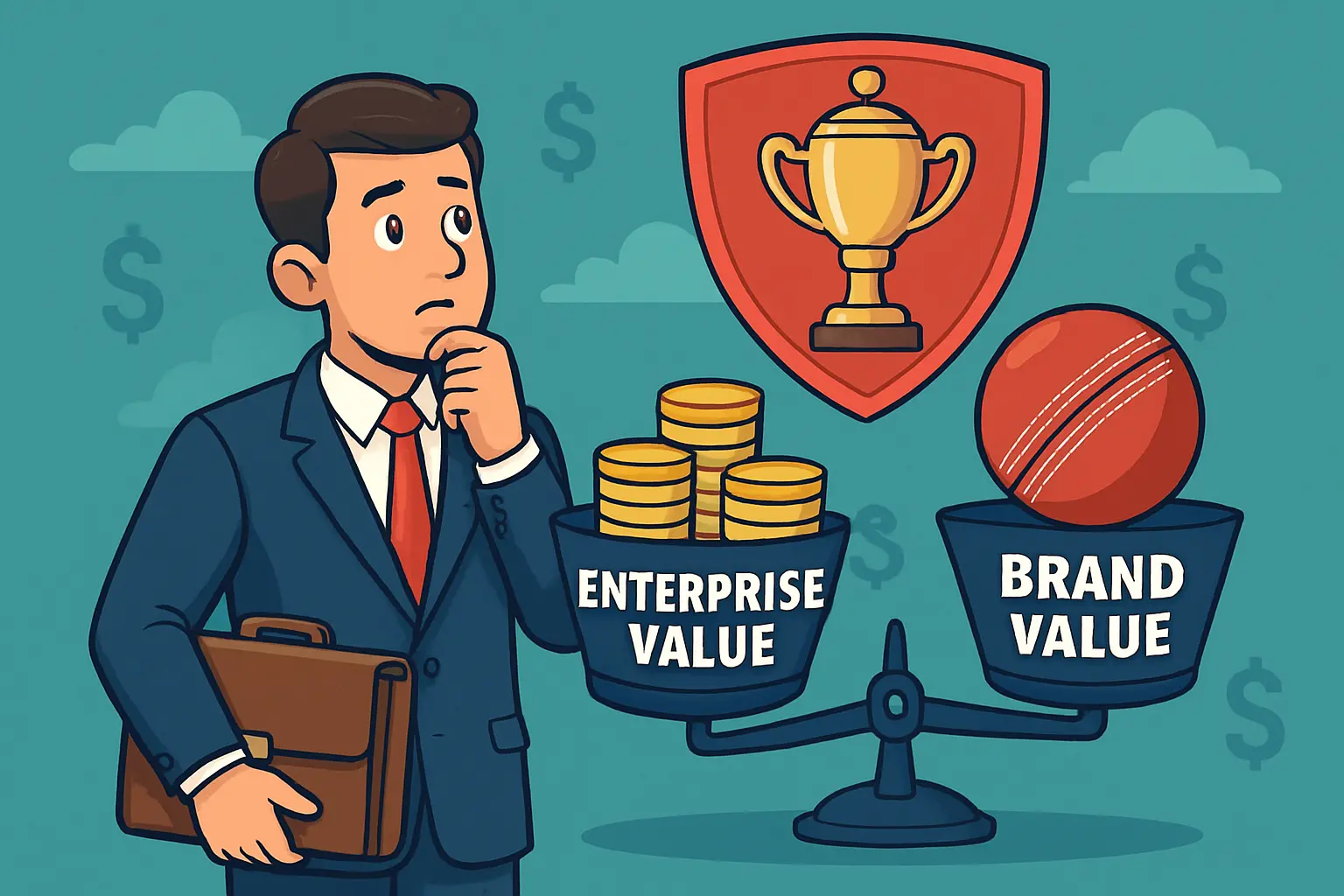
Pick any season and the money conversation in the IPL dugout ends the same way: who tops the value charts? The stakes go far beyond auctions and prize cheques. In the latest valuation cycle, Mumbai Indians rank as the richest IPL team on overall enterprise value, while Chennai Super Kings lead on pure brand value according to major sports-business analysts. Below you’ll find the full ranking, the why behind it, and how each franchise’s sponsorship mix, on-field returns, and digital firepower push the numbers up or pull them down.
Quick answer, straight up
- Richest IPL team by enterprise value: Mumbai Indians (overall business value, driven by diversified commercial portfolio, market size, and consistent monetization)
- Most valuable IPL team brand: Chennai Super Kings (brand-only valuation, buoyed by legacy wins, Dhoni-led continuity, and a cult-like fanbase)
Why two winners? Because “richest” depends on what you measure. Enterprise value looks at the whole business: equity value, commercial deals, central revenue share, and profitability outlook. Brand value isolates the strength of the franchise’s brand assets—name, logo, reputation, fan loyalty, and the premium it commands in sponsorship and licensing. They overlap, but they’re not identical metrics.
The richest IPL teams: current ranking, at a glance
The table below synthesizes recent assessments from Brand Finance and D&P India (previously Duff & Phelps), franchise disclosures, media-rights math, and sponsor market rates. Values are directional and rounded into ranges, reflecting that different agencies use different models.
Table: IPL franchise value snapshot (enterprise value vs brand value)
Mumbai Indians (MI)
- Enterprise value (overall): Very high (league-leading)
- Brand value (standalone): Very high (top-two)
- Change vs previous cycle: Up
- Why: Scale in India’s biggest market, elite sponsorship yield, perennial playoff contender aura, and a multi-team global network that compounds commercial leverage.
Chennai Super Kings (CSK)
- Enterprise value (overall): Very high (top-two)
- Brand value (standalone): League-leading
- Change vs previous cycle: Up
- Why: Enduring brand built on stability, Dhoni effect, high merchandise pull, extraordinarily sticky fan loyalty, and reliable sponsor renewals.
Kolkata Knight Riders (KKR)
- Enterprise value (overall): High
- Brand value (standalone): High and rising
- Change vs previous cycle: Up
- Why: Title pedigree, sweeping digital growth, and a celebrity-backed ownership that opens doors across categories and geographies.
Royal Challengers Bengaluru (RCB)
- Enterprise value (overall): High
- Brand value (standalone): Top tier in engagement
- Change vs previous cycle: Up
- Why: One of India’s most followed sports brands, engagement juggernaut on social, premium sponsor alignment despite lack of a title; Bengaluru market delivers high corporate demand.
Lucknow Super Giants (LSG)
- Enterprise value (overall): High and scaling
- Brand value (standalone): Mid-to-high
- Change vs previous cycle: Up
- Why: Strong launch base under a deep-pocketed owner, rapid competitive performances, Northern belt market depth, and a solid hospitality footprint at home.
Gujarat Titans (GT)
- Enterprise value (overall): High and scaling
- Brand value (standalone): Mid-to-high, fast climber
- Change vs previous cycle: Mixed to Up
- Why: Dream start to franchise life with silverware and finals appearance, large urban footprint in Ahmedabad, and a modern commercial stack anchored by a world-class stadium.
Delhi Capitals (DC)
- Enterprise value (overall): Mid-to-high
- Brand value (standalone): Mid-to-high
- Change vs previous cycle: Mixed
- Why: Access to a top-tier metro market with strong corporate demand, rising academy and women’s franchise synergies, but on-field inconsistency tempers sponsor premium.
Sunrisers Hyderabad (SRH)
- Enterprise value (overall): Mid-to-high
- Brand value (standalone): Mid
- Change vs previous cycle: Up
- Why: Competitive core with explosive performers, cost discipline, and a resilient sponsor bench in tech-heavy sectors across the South.
Rajasthan Royals (RR)
- Enterprise value (overall): Mid
- Brand value (standalone): Mid
- Change vs previous cycle: Up
- Why: Youth-first identity, talent development halo, growing international tie-ins, and a distinctive brand voice that punches above market size.
Punjab Kings (PBKS)
- Enterprise value (overall): Mid
- Brand value (standalone): Mid
- Change vs previous cycle: Mixed
- Why: Huge latent market in the North, passionate diaspora, strong entertainment-led positioning; inconsistent results and home split historically softened sponsor premiums.
Note on ranges and methodology: Brand Finance typically reports brand value and related uplift factors; D&P India’s sports valuation exercises frame enterprise value with revenue projections, risk discounts, and market multiples. They are both respected; they measure slightly different things. This synthesis reflects the latest public signal from both styles of analysis, plus sponsorship-rate intelligence.
Richest IPL team: what “richest” really means
- Enterprise value: The full business worth of the franchise, capturing expected future cash flows from central broadcast and sponsorship rights, local match-day income, team sponsorships, licensing, digital, and any diversified cricket assets (women’s team, academies, overseas T20 investments). This is what a hypothetical buyer would consider when pricing the franchise.
- Brand value: The monetary value of brand-related intangible assets—name, logo, brand IP, reputation, fan affinity, social footprint—and the price premium these can command. A team could lead on brand value but be second on enterprise value if another franchise monetizes more aggressively from a larger home market or broader portfolio.
- Auction purse ≠ valuation: The auction budget is a regulated spending cap for player signings. It is not a measure of the team’s financial strength or corporate valuation. The richest team on paper has exactly the same auction purse as the rest.
How the money flows in IPL: the engine behind valuation
The IPL revenue model rewards both equality and excellence. Here’s the high-level picture that every CFO in the league obsessively tracks:
Central revenue (the big pipe)
- Broadcast rights: The lion’s share. Split between traditional TV and digital streaming partners. Paid to the board across a multi-season cycle and shared with franchises via an agreed formula that blends equal share with performance and audience metrics.
- Central sponsorship: Title partner, on-ground partners, umpire/strategic-timeout rights, and assorted league-level packages. Also shared with teams.
Team-controlled revenue (the differentiator)
- Team sponsorships: Front-of-shirt, back-of-shirt, sleeve/cap, training kit, and a tiered grid of associate partners. The leading franchises command a premium CPM (cost per mille) because of higher reach and a better brand halo.
- Ticketing and hospitality: Gate receipts, corporate boxes, premium lounges. Teams in larger metros or with a massive supporter base consistently fill inventory and achieve higher per-seat yields.
- Merchandising and licensing: Jerseys and lifestyle lines, retail partnerships, e-commerce exclusives, and collector drops. A powerful brand with an iconic captain or cult players converts this into a flywheel.
- Digital and content: Sponsor-branded content series, short-form and live-interactive experiences, membership programs, newsletters, and increasingly, data-rich fan engagement that converts into long-term CRM assets.
- Academy and grassroots: Franchises with academy networks not only cultivate talent but also create brand pipelines in tier-2 and tier-3 cities while generating modest but reliable cash flows.
Costs and margins
- Player salaries: Regulated cap on squad spend with some overhead beyond the cap for support structures.
- Match operations and travel: Shared in part with venues and the board; high-visibility events have rising costs for in-stadium production and fan experiences.
- Content and marketing: Escalating as social and OTT demand scale.
- Long-term investments: Data analytics, scouting networks, multi-team portfolios, and sports-science capabilities that earn wins—and sponsors—down the line.
Smart owners don’t optimize for one season; they build a compounding machine. The richest IPL team today is the one that wins on multiple fronts: stable leadership, corporate market depth, relentless content output, and a calm hand in front of big sponsors when the market wobbles.
Team-by-team: how each franchise creates value
Mumbai Indians (MI)
Enterprise-value leader
- Why the business leads:
- Market moat: Mumbai’s corporate density and luxury hospitality demand lift match-day and box revenue to a league benchmark.
- Global footprint: A multi-team ecosystem across other T20 leagues increases sponsor appeal through 12-month activation windows. The MI brand is present far beyond a two-month window.
- Scouting and development: An academy and data-driven approach turn undervalued picks into stars. That turns into on-field consistency and sponsor confidence.
- Commercial playbook: Premium front-of-shirt deals, financial-services partners, tech partners, and high-intent consumer brands anchor the MI roster. Long-term renewals limit volatility.
- Performance impact: Even in seasons without titles, MI rarely vanishes from contention. Brands prize reliability over flash-in-the-pan spikes.
Chennai Super Kings (CSK)
Brand-value leader
- Why the brand leads:
- Continuity: Captaincy stability and culture-first approach created a blueprint few in world sport can match. Sponsors buy into that trust.
- Audience love: Merchandise flies because CSK fandom is tribal, familial, and multigenerational. Dhoni’s magnetism fuels not just attention but warmth.
- Sponsorship discipline: A balanced partner set across tyres/auto, airlines/travel, FMCG, fintech, and consumer tech. CSK avoids over-stacking one category and preserves price integrity.
- Business momentum: A top-two enterprise value, high renewal rates, and the best net sentiment in the league’s social graph.
Kolkata Knight Riders (KKR)
Surging on both tables
- Why the upswing:
- Celebrity aura with substance: The star power opens doors; the cricket has caught up in recent cycles with explosive intent and clear roles.
- Digital mastery: Slick content, sharp meme literacy, and a narrative tone that sponsors want to be part of. KKR is famously good at making brands feel culturally relevant.
- Market advantage: Kolkata’s stadium energy translates to TV and OTT exceptionally well, boosting impressions and negotiation leverage.
Royal Challengers Bengaluru (RCB)
Engagement champion
- Why RCB prints reach:
- Social behemoth: Off the field, RCB’s digital footprint rivals any global franchise. Partners don’t just rent logo space; they step into a fandom that lives online all year.
- City GDP matters: Bengaluru’s corporate resident base is a sponsor goldmine—SaaS, fintech, gaming, and D2C brands love the RCB audience profile.
- The title paradox: Lack of a trophy hasn’t hurt brand strength much. In some cases it heightens the underdog romance and binge-worthy story arcs.
Lucknow Super Giants (LSG)
New era, big steps
- What’s working:
- Ownership heft: Deep capital, professional structures, and modern management practices let LSG act like an incumbent, not a newcomer.
- Northern reach: Access to a vast Hindi-heartland audience makes for powerful TV and OTT numbers; it brings FMCG advertisers to the table.
- Hospitality utilisation: Stadium configuration and corporate seating matter more than most fans realize; LSG has room to scale yields.
Gujarat Titans (GT)
Breakout to contender brand
- What’s working:
- Winning start: Hardware early in the journey accelerates brand equity, translates to quick sponsor upgrades, and catalyzes merchandise.
- Stadium economics: Big-bowl stadiums reshape match-day revenue potential, particularly for premium match experiences.
- Team identity: Measured, tactical cricket with a penchant for finishing games creates a “trustable” brand in the eyes of boardrooms.
Delhi Capitals (DC)
Big market, tuning the engine
- Strengths:
- Metro magnet: Delhi’s brand and media concentration drives strong hospitality and corporate attendance.
- Youth platform: DC has leaned into developing young Indian talent, which sponsors love for long-term storytelling.
- Portfolio effect: Women’s franchise synergies help the value story—category exclusives can extend across teams.
- Growth unlock: Translating flashes of on-field brilliance into sustained deep runs would immediately lift sponsorship pricing.
Sunrisers Hyderabad (SRH)
Resilience with upside
- Strengths:
- Player profiles: Some of the league’s most watchable strikers and new-ball specialists. That explosiveness is sponsor-friendly in snackable content.
- Cost consciousness: SRH keeps a clear view of ROI across deals, helping maintain discipline during hot markets.
- Southern fortress: The South’s tech and education sectors are underrated sponsor pools and SRH taps both.
- Upswing lever: A couple of deep playoff runs clustered together—and the commercial grid will reprioritize SRH.
Rajasthan Royals (RR)
The talent factory
- Strengths:
- Scouting halo: RR’s brand is “find them early, make them great.” That resonates with sponsors chasing authenticity and youth.
- International tie-ins: Cross-market programs and academies turn a small market into a far-reaching one.
- Style points: RR’s visual identity and marketing have a distinctive elegance—valuable for lifestyle and premium brands.
- Constraint: Smaller local market puts a ceiling on ticket yield, but strong content and youth affinity mitigate it.
Punjab Kings (PBKS)
Big heart, big market to crack
- Strengths:
- Massive diaspora: Punjab’s global community gives PBKS distribution many teams envy.
- Entertainment-first: PBKS knows how to keep broadcasts lively; when results align, spikes are huge.
- Untapped domestic premium: Executing consistently at home and stabilizing leadership would unlock pricing tiers.
- Key lever: Convert episodic momentum into an annually reliable product; sponsors will pay for certainty.
The pillars that make a franchise “rich”
- Market size and corporate density: Mumbai, Delhi, Bengaluru, and Kolkata offer deeper wells of hospitality demand and brand partners. But this is a floor, not a guarantee.
- On-field reliability: Deep runs are better than one-off glitter. Brands sign multi-season deals—steady playoff appearances move numbers more than any single win.
- Iconic leadership: The Dhoni, Rohit, and Kohli eras show that trust and relatability can be quantified, then monetized.
- Social and cultural force: Fandom that behaves like a lifestyle community—memes, music, language—lets teams sell not just reach, but belonging.
- Portfolio strategy: Women’s teams, academies, and overseas T20 alliances extend the calendar and reduce off-season revenue dips.
- Data and content ops: CRM, first-party data, and a content studio that speaks Internet-native language turn impressions into conversions and renewals.
How valuation experts measure IPL teams
Different firms, different lenses—but here’s what runs through nearly every model:
- Revenue forecast: Central distribution anchored by broadcast and league sponsorship, plus club-controlled sponsorships, ticketing, hospitality, and merchandise.
- Growth rate: Momentum from recent titles, fan-base growth, digital metrics, and market expansion (regional-language penetration is a big deal).
- Risk factors: Single-star dependence, ownership volatility, regulatory changes, and competitive performance variance.
- Profitability: EBITDA margins after team operations and marketing. Efficient franchises with content-led fan monetization score better.
- Brand strength: Measured through surveys, social listening, engagement, search interest, merchandise throughput, and unaided recall.
Why “auction purse” keeps confusing people
Fans see a franchise spend up to an identical auction cap and wonder why some teams are called “richest.” Here’s the truth:
- The purse is a level playing field so cricket stays competitive.
- The valuation is a business judgement on future cash and brand equity.
- A franchise can spend the same at auction, yet carry a far bigger sponsorship book, a stronger ticketing business, and far more valuable IP.
- Title wins can push next-cycle purse carryovers or retention strategies, but don’t alter the cap itself.
Do titles directly make a team the most valuable?
Titles help, but not always in a straight line. The pattern that analysts actually observe:
- First title for a young franchise: outsized brand-value surge; advertisers pile in; social explodes.
- Back-to-back deep runs: better for enterprise value than a single peak, because sponsors pay for predictability.
- Iconic finals with stellar TV numbers: create one-off spikes; the durable effect is in subsequent renewals and category expansions.
Sponsor categories that pay premium in IPL
- Financial services and fintech: Cards, payments, and brokers bid for front-of-shirt dominance on elite teams.
- Consumer tech and smartphones: Massive category with relentless launch cycles timed to the season.
- Automobiles and tyres: Classic category that values reach and male-skewed prime-time eyeballs.
- Gaming and fantasy sports: Heavy digital spending, strong activation appetite across social.
- Edtech, beverages, FMCG, and e-commerce: Consistent spenders; premium for family-friendly and high-trust franchises.
Trendlines reshaping the rankings
- OTT-led measurement: Watch-time, pause-and-replay ad formats, and split-screen shoppable overlays are letting teams prove deeper engagement to sponsors.
- Regional-language commentary: Exploded the reach of teams with strong cultural anchors in the South and Hindi belt; it created new brand categories fit for those audiences.
- Women’s cricket synergy: Teams that run parallel women’s franchises are bundling inventory and telling inclusive stories—hugely valuable to global brands under ESG mandates.
- Global multi-team ownership: Mumbai, Kolkata, and others leverage scouting, coach networks, and sponsor bundles across continents. The halo effect runs both ways.
- Hospitality premiumization: Corporate boxes now function like micro-conferences with curated menus, legends drop-ins, and product theatres. It’s a profit center, not a side hustle.
- Data-backed fan clubs: Memberships no longer mean a card and a badge. Access layers, experiences, and early drops create recurring revenue.
Enterprise value vs brand value: who wins where
- Enterprise value leaderboard: Mumbai Indians edge ahead thanks to market scale, diversified revenue, and global portfolio effects. Chennai Super Kings follow closely with elite stability and commercial depth. A chasing pack of KKR and RCB often jostles within a narrow band, with LSG and GT accelerating as strong new-entrants with large-home-market advantages.
- Brand value leaderboard: Chennai Super Kings remain the gold standard for intangible brand strength—trust, emotion, and recall. Mumbai Indians match them in many metrics and occasionally surpass in certain surveys. KKR surges on cultural resonance; RCB remains the Internet’s favorite, a priceless asset in the streaming era.
Prize money vs valuation: a useful reality check
- Prize money is a nice headline; it is not the bedrock of a franchise’s worth.
- A single strong sponsor renewal dwarfs prize income across the long term.
- Valuation hinges on repeatable revenue: central distribution share, sponsorship ladder maturity, hospitality optimization, and digital monetization.
- The richest IPL team would remain so even if prize money halved—because enterprise fundamentals are bigger than seasonal bonuses.
Inside deals: how a front-of-shirt partnership gets priced
- Baseline: Reach and frequency. Planners study TV rating curves, daypart dominance, and device splits.
- Uplifts: Social video output, content studio velocity, player charisma, and the team’s tone-of-voice alignment with brand positioning.
- Packaging: Inventory extensions across sleeves, training kits, player-led content series, and match-day IP.
- Measurement: Multi-touch attribution and promo code splits are now standard; teams that can measure, win.
- Renewal: Performance matters, but so does how easy the team is to work with—shoot schedules, content approvals, player access.
MI vs CSK: the heavyweight duel that shapes the market
- MI’s case: Urban corporate depth, relentless pipeline of talent and content, global cross-league leverage, and an obsession with detail in commercial delivery. They make it easy for a CMO to say yes.
- CSK’s case: A brand that people trust in their bones. High conversion from casual fans to committed members, world-class merchandise throughput, and unmatched sentiment scores. They make partners feel at home.
- The outcome: A neck-and-neck narrative that keeps the market healthy. Prices stay anchored at the top, and everyone else prices against them.
KKR and RCB: the culture merchants
- KKR: Blends glamour and grit with clever, timely content and a fearless batting identity. The franchise understands how to make each season feel like a cultural moment, not just a schedule of matches.
- RCB: Turns every game into an event on the Internet. Even in off weeks, RCB moves conversation—which is why marketing heads keep earmarking budgets for the red-and-gold.
New kids, big strides: LSG and GT
- The lesson: Arrive ready. Both teams built strong backroom operations from day one, kept messaging tight, and treated content like oxygen.
- Why it matters: Sponsors hate uncertainty. When a new franchise shows processes, brand discipline, and competitive steel, the discount for “newness” evaporates quickly.
Regional spotlight: SRH and RR
- SRH: Savvy, data-friendly, and quietly powerful in the South. When their power-hitters catch fire, the halo extends into sponsor territories that crave youth markets.
- RR: The developmental mystique sells. Parents sign kids up for academies. Brands pitch campaigns around “the next big thing.” It’s a storyline with sponsors built in.
PBKS: unlocking the North Star
- The promise: A giant cultural footprint across Punjab and the diaspora; an entertainer’s heart; and a fanbase that shows up big when the team strings wins.
- The unlock: Stability across leadership and playing style, plus a ruthless approach to content formats that convert views into memberships.
Global comparisons: how IPL stacks up
- IPL vs other T20 leagues: Higher media-rights valuations, bigger domestic market, and a broader sponsor mix mean IPL teams often sit in a different financial tier. Other leagues nurture pipelines and stories; IPL monetizes star power at a scale advertisers can measure in weeks, not years.
- IPL vs US major leagues: Individual teams in the NFL or NBA might still eclipse IPL teams in absolute valuation, but the IPL’s velocity of growth has turned heads worldwide. The season is shorter; the impact window is intense; the monetization per minute is extraordinary.
Owner wealth vs team wealth: never confuse the two
- Owners bring credibility and capital, a real edge in weathering shocks and investing in capability.
- But valuation is a function of the franchise’s business model, not a direct read of the owner’s net worth.
- The richest IPL team can be owned by someone less wealthy than a competitor; the team’s revenue engine is the star here.
The Hindi quick-take
- Sabse ameer IPL team (overall enterprise value): Mumbai Indians
- Sabse badi brand value wali team: Chennai Super Kings
How rankings change: signals to watch
- League-wide media announcements: Changes to broadcast or digital packages ripple into central revenue and then into valuations.
- Title sponsor churn at the league level: Signals either category fatigue or fresh opportunity; both move team pricing indirectly.
- Big sponsor shifts at teams: When a front-of-shirt partner at a top club moves categories or reduces spend, it hints at wider market trends.
- Deep playoff runs and fairy-tale arcs: Not just for romance—these create negotiating leverage for renewals starting the very next week.
- Stadium upgrades and hospitality products: Boxes, lounges, and on-site tech that make corporates spend more per match.
Frequently asked clarifications
Which is the richest IPL team right now?
- By enterprise value: Mumbai Indians
- By brand value: Chennai Super Kings
Which is the richest cricket franchise in the world?
IPL’s top franchises generally lead because of India’s scale and broadcast economics. MI and CSK routinely appear in global top lists for T20 franchise value.
Has KKR overtaken MI or CSK?
On some brand-value leaderboards and in certain seasons, KKR has surged dramatically. On pure enterprise value over multiple cycles, MI and CSK still set the pace, with RCB and KKR close enough to make it a live contest.
Why is CSK often ranked as the most valuable brand?
Continuity of leadership, a distinctive identity built on trust and calm, and almost mythic loyalty turn into hard numbers in merchandise, renewals, and unaided recall. The logo means something beyond the match.
Do IPL titles increase a team’s brand value?
Yes, especially for younger teams or after long droughts. The effect is strongest when followed by another deep run. Brands pay for reliability as much as for rings.
Is the auction purse related to franchise valuation?
No. The purse is a fixed cap to maintain competitive balance. Valuation is a function of revenue, profitability, and brand strength.
What lifts a mid-table team into the “richest” conversation?
Three levers: repeatable deep playoff runs, a modern content-and-CRM stack that proves sponsor ROI, and hospitality maximization at home. Add a clear brand voice and one or two icons, and the gap can close fast.
Do digital followers directly translate into revenue?
Not automatically. What matters is content velocity, retention, and conversion into memberships and sponsor KPIs. RCB and KKR are case studies in turning attention into tangible deal value.
How much does market size matter?
It sets your floor, not your ceiling. Mumbai and Delhi begin with advantages. But Chennai and Bengaluru show that trust, identity, and content can overcome market constraints.
Data notes and sources you can trust
- Brand Finance: Tracks IPL franchise brand values and brand strength scores with consistent methodology over multiple cycles.
- D&P India (formerly Duff & Phelps): Produces comprehensive enterprise-value assessments for Indian sports properties using revenue multiples and discount models.
- Primary indicators to watch: front-of-shirt deal sizes and tenure, central revenue distributions, OTT watch-time trends, and hospitality sell-through.
What the next phase looks like
- Stadium tech and premiumization: Suite experiences, ultra-HD replays, and in-bowl activations that look like mini product launches.
- Data-rich memberships: A shift from discounts to experiences—training ground access, inside-the-huddle content, and meet-and-meets that money couldn’t buy a few seasons ago.
- Global calendar: More cross-league tournaments and content collabs across multi-team owners make a twelve-month revenue curve the norm.
- Women’s cricket as a core: Bundled rights, shared sponsors, and unified storytelling that multiplies inventory and reach.
A concise definition box for SERP snippets
- Richest IPL team: The franchise with the highest enterprise value (overall business worth)
- Most valuable IPL team: The franchise with the highest brand value (brand-only worth)
- Purse vs valuation: The auction purse is a spending cap, not a measure of wealth
Final word: why MI and CSK keep everyone honest
Year after year, the sport’s biggest cheques gravitate to the franchises that pair clarity with craft. Mumbai Indians, with their enterprise engine humming across markets, and Chennai Super Kings, with a brand built on trust and ritual, set the curve. KKR and RCB keep nipping at their heels with cultural clarity and digital brilliance. LSG and GT, meanwhile, have proven that you can arrive late and still dine at the head table if you build right and win early.
That is the beauty of this league’s economics. The richest IPL team doesn’t happen by accident. It happens by design—an alchemy of market sense, scouting, content, hospitality, and a jersey that means something deep to the people who wear it. In the end, that meaning is what brands pay for. And that’s why the title of “richest” keeps rotating among only a select few who understand that in cricket’s boldest marketplace, money follows love, and love follows identity.