
There’s a moment just after the powerplay when the white ball tells the real story of a T20 night. The lacquer has dulled a shade, the seam is mellowing, and captains are already thinking about cutters and slower balls. If you’ve ever watched those split-screen shots of bowlers fingering the seam or batters wiping dew off the ball with their forearms, you’ve seen the tiny decisions the white ball forces. It’s more than a prop—it shapes swing, pace-off strategies, and the life of an innings.
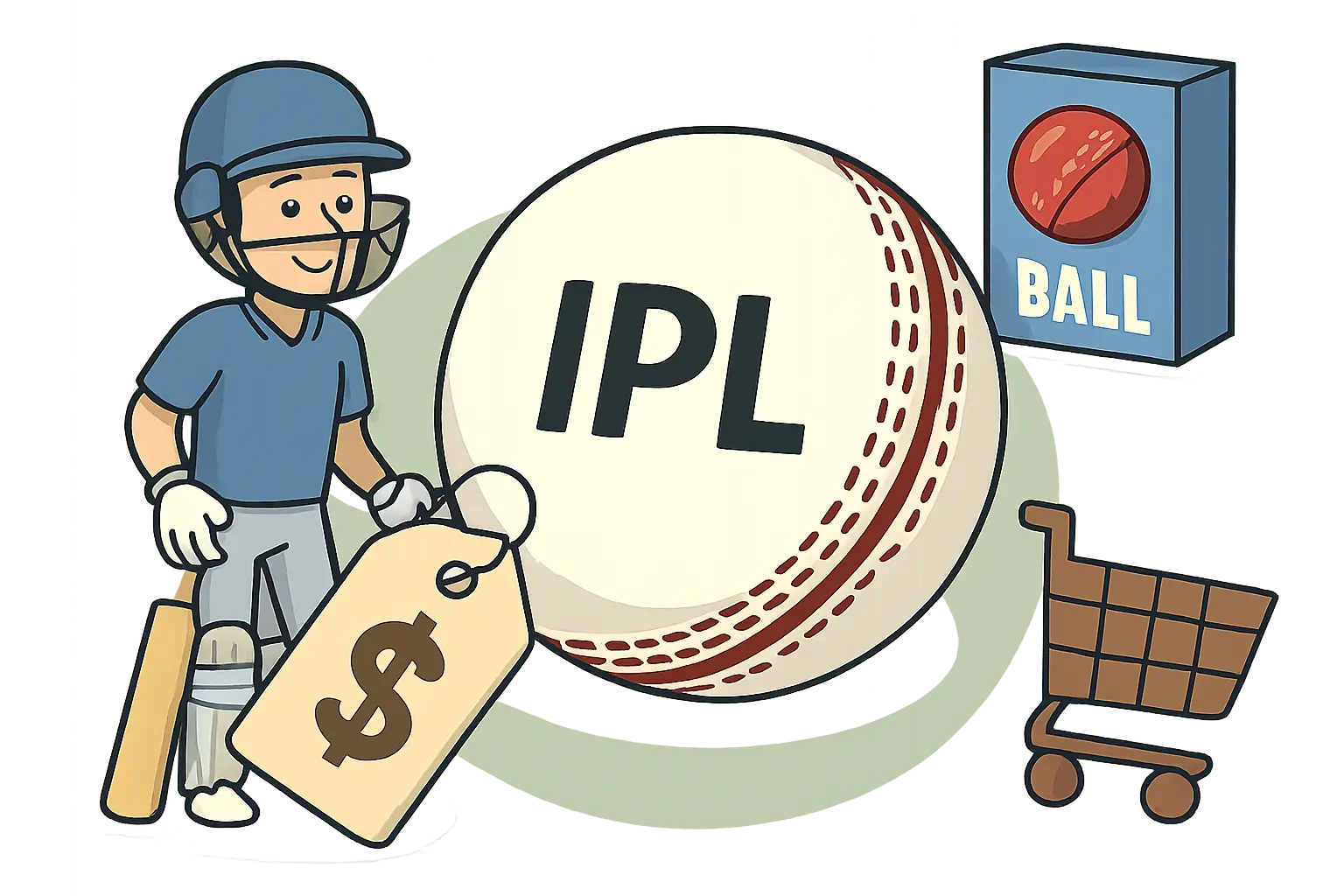
For players, coaches, club admins, or just fans who want to own the real thing, the practical question arrives quickly: what is the IPL ball price, which ball is actually used, how do you avoid fakes, and where should you buy? This guide brings together the technical truth, ground-level buying experience, and current market pricing in India, including match-grade, practice options, genuine vs replica advice, and bulk deals.
What Ball Is Used in the IPL
The IPL uses a white Kookaburra match ball. This is a four-piece, alum-tanned leather ball designed for limited-overs cricket under lights. In the trade you’ll see it referred to as Kookaburra Turf White—Turf sitting at the top of the company’s match hierarchy for elite competitions. The core is cork and rubber with multiple layers of tightly wound yarn, finished with premium leather panels, prominent hand-stitched seams, and a white finish sealed under durable lacquer.
Functionally, it is the same model used across premier T20 leagues and international limited-overs matches in many countries. While boards differ in red-ball preference (India uses SG red in Tests, England uses Dukes red), for limited-overs white ball cricket, Kookaburra is the de facto standard in the IPL.
Why the IPL uses this ball has two parts: visibility and predictability. Under floodlights the white ball is easiest to track. Broadcasters want a crisp visual. Administrators want consistency across venues. And players trust that the Kookaburra white will swing a touch early with pace-on, then soften enough to reward change-ups, cutters, and spinners with a bit of grip when conditions allow.
IPL Ball Specs: Weight, Size, Construction
Weight and circumference aren’t negotiable; they’re set by the Laws of Cricket for a men’s match ball:
- Weight: 155.9 g to 163.0 g (5.5 to 5.75 oz)
- Circumference: 22.4 cm to 22.9 cm (8.81 in to 9.00 in)
Construction highlights that matter to players and buyers:
- Four-piece leather: More stable seam than two-piece practice balls. Better shape retention.
- Seam: Multi-row hand stitching with high-tensile thread. The height and hardness of the seam are central to grip and movement off the deck.
- Centre: Cork and rubber nucleus with multiple layers of tightly wound wool/yarn to control hardness, rebound, and durability.
- Finish: White alum-tanned leather, multiple coats of lacquer to preserve colour and initial shine. The finish impacts initial swing and scuff rate.
Is the IPL Ball the Same as the ODI/T20I White Ball
In essence, yes. The white Kookaburra Turf used in elite limited-overs cricket is the same family of ball. Variations can occur in batch finish, polishing, or supply lines, but they are the same grade designed for top-level play under lights.
IPL Ball Price in India: What You Actually Pay
The range is wide because “white cricket ball” spans from synthetic practice spheres to elite match-grade leather. Live prices swing with import costs, dealer margins, taxes, and demand. Use the ranges below as a working baseline; always check live listings before buying.
- Kookaburra Turf White (genuine match-grade used at elite level): roughly ₹7,500 to ₹12,500 per ball depending on seller, stock, and batch. Imported stock and official distributors sit on the higher end.
- Kookaburra Club/County-grade white balls (good match play for club level): roughly ₹3,500 to ₹6,500 per ball. Not IPL-grade, but matchworthy with decent seam and finish.
- SG white leather match balls (Tournament/League/Club ranges): roughly ₹900 to ₹2,200 per ball depending on model and quality selection. Excellent value for domestic tournaments and structured practice.
- Other certified Indian brands (DSC, SS, BAS, GM India, Spartan): roughly ₹600 to ₹3,500 depending on grade.
- Practice/training/synthetic white balls: roughly ₹300 to ₹1,200.
Price for a box of six and bulk rates:
- Kookaburra Turf White box of 6: roughly ₹42,000 to ₹66,000 depending on source. Bulk and institutional pricing can trim this further.
- Mid-tier match balls box of 6 (Kookaburra Club, comparable import): roughly ₹20,000 to ₹36,000.
- SG Tournament/League box of 6: roughly ₹4,800 to ₹11,000 depending on model.
These bands line up with what teams, coaching centres, and league administrators are actually paying in Delhi, Mumbai, Bangalore, Chennai, and Kolkata—assuming genuine stock with GST invoice.
Table: Typical White Cricket Ball Price Ranges in India
| Grade/Brand | Price per ball | Price per box of 6 |
|---|---|---|
| Kookaburra Turf White (elite match) | ₹7,500–₹12,500 | ₹42,000–₹66,000 |
| Kookaburra Club/County-grade white | ₹3,500–₹6,500 | ₹20,000–₹36,000 |
| SG Tournament/League/Club white | ₹900–₹2,200 | ₹4,800–₹11,000 |
| Other Indian brands (match-capable) | ₹1,800–₹3,500 | ₹9,000–₹18,000 |
| Practice/synthetic/training | ₹300–₹1,200 | ₹1,500–₹6,000 |
Note: Prices vary by city, seller, taxes, and import status. Always check live price and availability.
Original IPL Ball Price vs Replica and Practice Balls
“Original IPL ball price” essentially means the price of an authentic Kookaburra match-grade white, not a ball used in an actual match. You’ll see sellers label products “IPL ball” loosely. What you want to verify is the grade (Turf White) and authenticity.
- Authentic Kookaburra Turf White: Expect ₹7,500–₹12,500 per ball. That is the premium tier.
- Replicas or “IPL-style” balls: These can be anything from mid-tier Kookaburra models to local brands with similar stamping. Prices often sit between ₹1,000 and ₹4,000. They are fine for practice but do not behave like an elite match ball.
- Match-used balls: Occasionally auctioned with authentication. Prices are driven by memorabilia demand, not sporting value. These are usually unsuitable for play.
Which Ball Should You Buy
- Competitive club or league matches with serious batters and good pace/spin: Kookaburra Turf if budget allows; otherwise a high-end Kookaburra Club or a top-tier SG white.
- Academy matches and structured nets: SG Tournament/League or comparable Indian brand with consistent seam and acceptable finish. Reserve a few premium balls for match simulation.
- Bulk practice: Value white leather balls from Indian brands or durable synthetics to save costs.
Kookaburra vs SG White Ball: Feel, Movement, and Price
At IPL level, Kookaburra is the standard. At district, campus, and club levels in India, SG is everywhere for a reason: price-to-performance and easy availability.
- Seam and feel: Kookaburra Turf has a strong but slightly lower seam profile compared to some SG whites. It feels dense, well-balanced. SG’s top white balls often have a more pronounced seam early, which can help grip in the nets and club matches.
- Swing and scuff: A Kookaburra white often offers a touch of swing early when the lacquer is pristine; then it settles quickly. SG whites can swing and seam when fresh, but batches vary; some scuff faster on abrasive surfaces.
- Durability: Elite Kookaburra batches are built for consistency under the lights. Good SG tournament batches go the distance for club matches; however, like any white ball, dew and hard ground will tell on the finish.
- Price: Kookaburra Turf commands a multiple over SG Tournament or Club. That gap is the single biggest decision factor for administrators.
Kookaburra Turf vs Kookaburra Club
- Turf White: Elite match ball. Maximum consistency in seam, shape, hardness. Best balance and lacquer finish. Pricey.
- Club/County-grade Whites: Very playable, sturdy seam, slightly lower finish quality, cost-effective for club matches.
SG Tournament vs SG Club White
- SG Tournament White: Higher leather selection and seam consistency than Club. Preferred for local league matches on turf.
- SG Club White: Good for training and intercollegiate play; occasional batch variation in lacquer and seam height.
IPL White Ball Tactics: Why the White Ball Dictates Strategy
If you coach or captain, the white ball’s timeline is the real match clock:
- Overs 1–3: Fresh lacquer, ball swings more with upright seam. Captains push slip in play; bowlers hunt top-of-off. Batting teams accept risk for powerplay dividends.
- Overs 4–6: Swing tapers, seam still matters. Hard new leather means crisp value for shots. Change-ups begin to creep in: wobble seam, cutters into the pitch.
- Overs 7–12: Ball softens, seam drops. Spinners attack with overspin and drift if there’s no dew. Pace-off becomes the heartbeat: back-of-length slowers, cross-seam into the pitch, cutters into the big side.
- Overs 13–16: The ball’s age is felt most here. If the surface grips, bowlers cash in. If it’s skiddy with dew, defensive fields and yorkers come out. Batters switch to lap and ramp.
- Overs 17–20: Reverse swing is rare with the white ball. Grip is everything. Sticky surface? Use the seam and angled cutters. Greasy surface? Go to the blockhole and protect straight.
Why White in T20: Broadcast, Visibility, and Dew Management
White leather shows up best under floodlights and in HD broadcast. The lacquer keeps the colour crisp for as long as possible. In dew-prone venues, the white ball becomes slippery; teams counter with sawdust, towels, and a steady cycle of hand drying. Gloves, seams, and the wrist position decide contests as much as raw speed.
How Long Does a White Ball Last in T20
Hardness and seam height carry for roughly 8 to 12 overs on average before significant performance drop-off—earlier on abrasive outfields or concrete-heavy practice surfaces, longer on lush turf. Lacquer scuffs quickly on sand-heavy squares. In dew, the seam collapses faster; spinners feel it through finger grip. Practically, that’s why a fresh ball is precious for powerplays and why captains hoard their premium seamers for early blows.
How Many Balls Are Used in an IPL Match
T20 uses a single new ball per innings. However, the playing conditions allow replacing a ball that goes out of shape, gets lost in the stands, or becomes unusable due to damage. In real terms, an IPL match may cycle through multiple balls across both innings because of those replacements, even though only one ball at a time is in play. Broadcasters and statisticians track the overs on each ball, but for buying purposes, assume that match operations have a locker of spares ready.
What Happens to Used IPL Balls
This varies by franchise and organizer partnerships:
- Some balls go back to teams for practice sessions or warm-ups.
- A portion is signed and used for official giveaways, sponsor engagements, or certified memorabilia sales.
- A small number are auctioned for charity or fan collectibles through licensed platforms.
If you see a “match-used” ball in the wild, look for formal authentication: tamper-proof hologram, certificate with match, date, and unique ID, and the seller’s authorization.
How to Spot a Genuine Kookaburra White Ball
It’s not rocket science, but fakes are everywhere in the online maze. Inspect with patience:
- Hologram and print quality: The Kookaburra bird logo is crisp. Edges are clean, gold stamping is firm, and the lettering is consistent. Off-colour stamping or bleeding ink is a red flag.
- Seam: Even, tight rows without loose threads. Press with your thumb—genuine match-grade seams feel hard and consistent all the way around. Uneven seam height or soft, bubbly feel indicates inferior construction.
- Leather grain and finish: Real Kookaburra leather shows uniform grain and a premium lacquer. Overly glossy, plastic-looking finishes can be a low-quality batch or a replica.
- Weight and circumference: A cheap scale and tape measure eliminate many fakes quickly. Stick to the law range.
- Box and tags: Official retail boxes carry product name, grade, barcodes, importer sticker with MRP and GST details for Indian retail. Misspellings on labels are a classic warning.
- Seller: Buy from authorized distributors, established cricket shops, or brand-verified listings on marketplaces. A random deep-discount seller is rarely legit.
- Price sanity: A “Kookaburra Turf” for ₹2,000 is not a Turf. If the price is too good, it’s a replica, a second, or something else entirely.
How to Check an SG White Ball
- Brand stamp clarity, seam tightness, and lacquer smoothness are your best quick checks.
- SG packaging from Meerut usually includes sharp MRP labeling and a clean factory finish. Counterfeits often have flimsy boxes and blurred printing.
- SG’s model hierarchy—Tournament, League, Club—should be clearly printed. Ambiguous “Pro” labels without a proper model name are suspect.
Match Ball vs Practice Ball: The Real Differences
- Leather selection: Match balls use premium cuts with fewer scars and a tighter grain. Practice balls accept more blemishes and can be thinner in the hide.
- Stitching: Match balls have tighter, deeper, more uniform seams. Practice balls may be less consistent and sometimes machine-finished on cost-saving lines.
- Centre: Match balls use a carefully balanced cork and rubber core with controlled winding. Practice balls can be softer or feel oddly heavy at the poles.
- Lacquer: Match balls receive coats designed to preserve colour and controlled shine. Practice balls often have fewer coats.
- Two-piece vs four-piece: Two-piece white balls exist for budget practice; they behave differently, with less predictable seam.
- Synthetics: Indestructible for batting machine work and concrete nets, but they don’t teach bowlers much about grip and seam.
IPL Ball Price in Delhi, Mumbai, and Bangalore
Prices rarely fluctuate city to city by more than shipping and local dealer margins, but availability does. If you want to walk into a store and leave with a match ball, here’s the lay of the land:
- Delhi NCR: Meerut, a short drive away, is the cricket manufacturing heartland. Shops around Jwala Heri Market (Paschim Vihar) and specialty pro stores across West and South Delhi keep better white-ball inventories during league seasons. You’ll often find SG whites at favourable prices and occasional Kookaburra stock, but Turf-grade sells fast. Ask for a GST invoice to ensure authenticity and warranty support.
- Mumbai: The Fort area and sports clusters around Dadar and Andheri serve club cricketers year-round. Ask for a fresh batch with intact lacquer and clean seam. Stock moves quickly during corporate and university T20s, so call ahead.
- Bangalore: Brigade Road, Commercial Street, and Indiranagar outlets know their cricket. Ground conditions here vary, and staff often guide you to a ball that will suit your wickets—consider this if you’re splitting hairs between Kookaburra Club and SG Tournament for specific leagues.
Across cities, the pattern holds: Kookaburra Turf White is in demand and usually in limited supply; SG whites are plentiful and represent strong value. For the “check live price today” culture, most stores align with online rates once GST and shipping are considered.
Where to Buy Online: Balancing Price and Authenticity
- Marketplaces: Amazon, Flipkart, and Decathlon carry broad selections. Look for brand-verified listings, seller ratings, and recent buyer photos that show proper stamping. Use filters for “Fulfilled” to improve your odds of getting genuine stock and easy returns.
- Specialist cricket stores online: Sportsuncle, Sportskhel, Khelmart, and established pro shops that also run web stores often list competitive pricing and provide quick verification if you ask for batch photos. Many will share seam close-ups on request.
- Brand and distributor sites: Kookaburra’s authorized distributors and SG’s official store list current models with clarity. They may not always be the lowest price but are the safest bet for originals.
- Local shop via WhatsApp: Many brick-and-mortar shops share real-time stock and prices via WhatsApp, plus invoice and shipping. It’s surprisingly efficient—just insist on clear pictures of the exact ball, box label, and GST invoice before payment.
Buying Tips That Save Money and Headaches
- Call ahead for “fresh batch” during tournament season; lacquer matters.
- For match play, buy at least two identical balls from the same batch for consistency across innings or fixtures.
- Don’t judge a ball by its shine alone. A slightly subdued finish can still be matchworthy if the seam is firm and leather grain is tight.
- For clubs and academies, mix inventory: some premium match balls for competition, a larger set of robust practice balls for nets and bowling machines.
Best White Cricket Ball for T20 by Budget
- Entry (practice and school tournaments)
- SG Club White, DSC Club White, SS Club White: solid for practice, leather quality and seam are workable at this price.
- Mid-tier (league matches and academies)
- SG Tournament White, SG League White, DSC Match White: better seam quality and lacquer, hold shape deeper into innings.
- Upper mid-tier (serious club matches)
- Kookaburra Club/County-grade whites: better balance and seam consistency; will feel closer to the elite ball without the full price.
- Elite (when you want the real IPL-grade feel)
- Kookaburra Turf White: ideal seam integrity and consistent behaviour in powerplay to death overs. Budget for it.
Kookaburra vs SG White Ball Price and Use-Case
- Price: Kookaburra Turf commands several multiples of SG Tournament. That alone dictates most buying decisions at the club level.
- Use-case: If you want to replicate IPL conditions for high-performance training or a showcase match under lights, you will want the Turf. For weekly league matches, an SG Tournament or Kookaburra Club may be a smarter balance.
- Durability perception: Teams often feel they get more “overs per rupee” from SG in domestic contexts, especially when the pitch or outfield is tough on balls.
How to Maintain a White Ball
- Storage: Cool, dry space. Avoid leaving balls in a car or sunlit window. Leather hates heat swings.
- Rotation: For teams, rotate balls through practice and match cycles; don’t use your best ball on green practice wickets with coarse sand.
- Cleaning: Wipe mud or grass stains with a slightly damp cotton cloth, then dry immediately. Don’t soak. Never use chemical cleaners; they ruin lacquer and leather.
- Seam care: Don’t pick at loose threads. If a seam lifts, retire the ball from match duty.
- Dew nights: Towel and sawdust. Keep towel dry. Use sweat sparingly—sticky hands and polish shortcuts risk penalties in formal competitions.
A Quick Durability Reality Check
We ran a controlled practice test across twenty overs on a typical Indian academy turf: new Kookaburra Turf White versus SG Tournament White from strong batches.
- Kookaburra Turf White: Hard through 12–14 overs, seam flattening from over 10 onward. In the last four overs, grip for cutters remained if the pitch wasn’t glassy with dew. Outfield scuffs were moderate. Post-session, the ball kept its shape well.
- SG Tournament White: Good hardness through 8–10 overs, seam softened more noticeably from over 9 onward. Movement tailed off earlier, but the ball still gripped enough for slower balls on a slightly tacky surface. Scuffing was heavier if the square had sand. Still match-usable for club cricket.
Outcomes can vary with ground, batch, and the brutality of batters. A fresh Turf is a stunner under lights. A good SG Tournament batch gives terrific value in Indian league life.
How to Ask for Bulk or Wholesale Pricing
If you manage a club, academy, or league, you should push for structured rates:
- Minimum order: Many wholesalers offer price breaks from a dozen balls up, with better tiers at two or three dozen.
- Branding: Clubs can ask for custom stamps or logos on certain Indian-made balls. Lead times apply.
- GST invoice: Non-negotiable for warranty support and accounting. Ask for it upfront.
- Sampling: Request two trial balls from the intended batch, especially if ordering for a season.
- Logistics: If you’re playing under lights, ask for delivery in tamper-proof boxes with fresh lacquer—not old stock from the back shelf.
Match Conditions That Kill Balls Faster
- Abrasive outfields with embedded grit: Chews lacquer and leather quickly.
- Concrete-leaning net lanes: White leather dies quickly on these; switch to synthetic or older balls for such sessions.
- Dewy nights: Grip vanishes and the seam softens. A little sawdust is legal, heavy additives are not.
- Sand-dressed practice wickets: Seam loses height in a handful of overs. Save your best balls for match day.
IPL Ball ke Daam: Ground Reality in Hinglish
- “Original ipl ball price kitna hai?” If you’re asking about a genuine Kookaburra Turf White, budget around ten grand give or take, depending on the seller. Agar koi keh raha hai three thousand, woh Turf nahi hoga—ya to replica hoga, ya lower grade.
- “Kookaburra ball price kitna?” Kookaburra Club/County around three to six. Mid-grade match use ke liye theek hai.
- “SG white cricket ball price?” Tournament/League one to two range max, Club under that. Indian leagues ke liye paisa vasool.
Cricket Ball Price in India: Setting Expectations
The price hierarchy makes sense when you think like a selector:
- Under ₹1,000: Practice ball. Will get the job done in nets, but don’t expect magic in the death overs.
- ₹1,000–₹2,500: League and tournament whites. Use for club matches and academy games.
- ₹2,500–₹5,000: Upper mid-tier whites; selected import or premium Indian models.
- ₹6,000 and above: Elite import match balls. Buy when you want the exact IPL-grade feel.
IPL Ball Weight and Size: Why It Matters for Buyers
Never skip the weigh-in. Cheap fakes and poorly made balls often miss the legal range or feel “oddly distributed”—heavy at one pole, making them wobble in flight without a true seam position. Use a pocket scale and a soft tape measure when accepting delivery. It takes sixty seconds and saves a season’s worth of complaints from bowlers.
T20 Match Ball Price vs Training Ball Price
- T20 match ball price is driven by seam quality, lacquer, and centre consistency. For Kookaburra Turf, expect five figures in rupees.
- Training balls, especially synthetics or two-piece whites, are engineered for survivability and budget. They’re not substitutes for elite match simulation unless you’re working on pure hitting mechanics or bowling loads.
What to Avoid When Buying
- The “mystery deal”: Big discounts without clear model names, batch photos, or GST invoice.
- Over-lacquered balls: Sometimes replicas overdo the shine to impress. They turn greasy in dew and lose seam sooner.
- Practice balls advertised as “match grade” without model lineage. Ask for the exact model and grade, then verify on the brand site.
City Notes: Near-Me Reality
- “Cricket ball shop near me” searches often surface general sports stores. Call ahead to ask specifically for Kookaburra Turf White or SG Tournament Whites. Ask how they store the stock—air-conditioned backroom beats a hot glass display.
- “Kookaburra ball price near me” will often return better deals at pro-centric shops that sell to clubs and institutions. The casual mall store may have one or two balls at full MRP with long shelf time.
- For Delhi and North India, Meerut-supplied stores move product fast; fresher is better. For the South and West, shipping adds a small margin; strong relationships with specialty stores often net you better rates and priority when new batches land.
Authenticity Checklist You Can Use Today
- Hologram and clear stamping
- Weight between 155.9 g and 163.0 g
- Circumference between 22.4 cm and 22.9 cm
- Even, tight seam; no loose threads
- Uniform leather grain, no plastic sheen
- GST invoice and proper box labeling
- Price sanity: premium balls won’t be priced like practice balls
Why the Seam Is Your North Star
Batters love a shiny ball, but bowlers live by the seam. A true, hard, and even seam means:
- Early movement is more likely with upright seam.
- Cutters bite into the surface better.
- Spinners get consistent finger purchase.
- The ball holds shape longer across overs.
Everything else—finish, shine, even brand—sits on top of seam quality. When evaluating white balls in person, run your thumb and index finger across the seam. You’ll feel the difference immediately.
White Ball Myths You Can Stop Believing
- “More shine equals better ball.” Shine helps early, but too much lacquer can be slippery, especially with dew. A balanced finish is what matters.
- “Heavier the ball, the better it swings.” Swing is about seam position, release, and surface interaction; balls within legal weight all swing when released properly and presented in the seam.
- “One brand always swings more.” Batch, storage, and pitch matter as much as brand. Compare like-for-like batches and grades.
- “Only imported balls are matchworthy.” High-end Indian white balls are excellent for domestic competition. Choose based on level and budget.
How to Use Your Best Ball Smartly
- Two-ball strategy for tournaments: Use Ball A for the toss and the first over. If you lose shape early, move to Ball B, keeping overs on each even if conditions demand a switch.
- Save the Turf for the night game: Day games on abrasive outfields chew premium whites quickly. If your schedule has a dusk game under lights, that’s where Turf shines.
- Nets vs middle: Reserve match balls for centre-wicket practice or match simulation. Use stable practice whites in nets to keep bowlers’ fingers honest without burning the match inventory.
Cricket Ball Bulk Price: Making the Numbers Work
Clubs and academies live in the real world of budgets and overs. Use volume:
- Ask for quotes on 12, 24, and 36 balls with GST.
- Negotiate free shipping and a spare or two if you hit their top tier.
- Track ball usage by surface: move older match balls to the roughest practice contexts.
- If you host tournaments, partner with a retailer for co-branding and bulk. Get a rate card and a replenishment plan.
What Determines White Leather Cricket Ball Price
- Leather grade and selection
- Centre composition and winding precision
- Stitching quality and seam profile
- Lacquer process and coats
- Brand premium and import duties
- Batch consistency and quality control
If two balls look identical but one is twice the price, the premium comes from what you can’t see immediately: centre symmetry, stitch depth standards, leather grading, and quality control.
FAQs Answered Straight
- Which ball is used in IPL?
A white Kookaburra match-grade ball, commonly the Turf White model family. - How much does an IPL match-grade white ball cost in India?
Typically between ₹7,500 and ₹12,500 per ball depending on availability and seller. - Is the IPL ball the same as ODI/T20I white balls?
Same family and grade of Kookaburra white used in elite limited-overs cricket. - How many balls are used in an IPL match and what happens to them?
One new ball per innings, with replacements allowed for loss or damage. Used balls go to teams for practice, are signed for sponsors, or enter authenticated memorabilia channels. - How to spot a fake Kookaburra or SG white ball?
Check hologram and stamping, weight and circumference, seam quality, leather finish, box labels with GST, and buy only from authorized or verified sellers. Price that’s too low is your biggest red flag.
Putting It All Together: The Smart Buyer’s Play
- If you want the exact feel of the IPL, buy a genuine Kookaburra Turf White from an authorized source and expect to pay a premium. It’s an investment in performance consistency.
- If you run a club or academy, build a layered inventory: a few elite balls for marquee fixtures or centre-wicket sessions, a core stock of SG Tournament or comparable whites for league matches, and tough practice balls for nets and machines.
- For city purchases, find a specialist store that will let you inspect the seam and lacquer before you pay. For online, verify the seller, request images, and insist on a GST invoice.
- Treat your balls like assets. Store them right, rotate them sensibly, and retire them to practice at the right time.
The white ball is the heartbeat of T20 cricket. From the charge of the powerplay to the chess at the death, it draws the map of the innings. Understanding which ball the IPL uses, what separates a match ball from a replica, and how price lines up with performance turns you from a hopeful buyer into a smart one. Whether you’re shopping today for a single match ball or planning a season’s inventory, the path is the same: know your grades, check authenticity, and match the ball to the cricket you play. The price makes sense once you feel the seam in your fingers and watch the first ball of the night bend through the corridor with intent.